When summer heat hits a fever pitch and the humidity makes the air feel thick, choosing the wrong outfit can ruin your entire day. If you are looking to refresh your hot-weather wardrobe, check out our New Items on Sale.
If you want to stay cool, comfortable, and dry, you need to look closely at your clothing labels. Here is the definitive breakdown of the absolute best fabric for extreme humidity, along with a few reliable runners-up.
The Undisputed Winner: 100% Linen
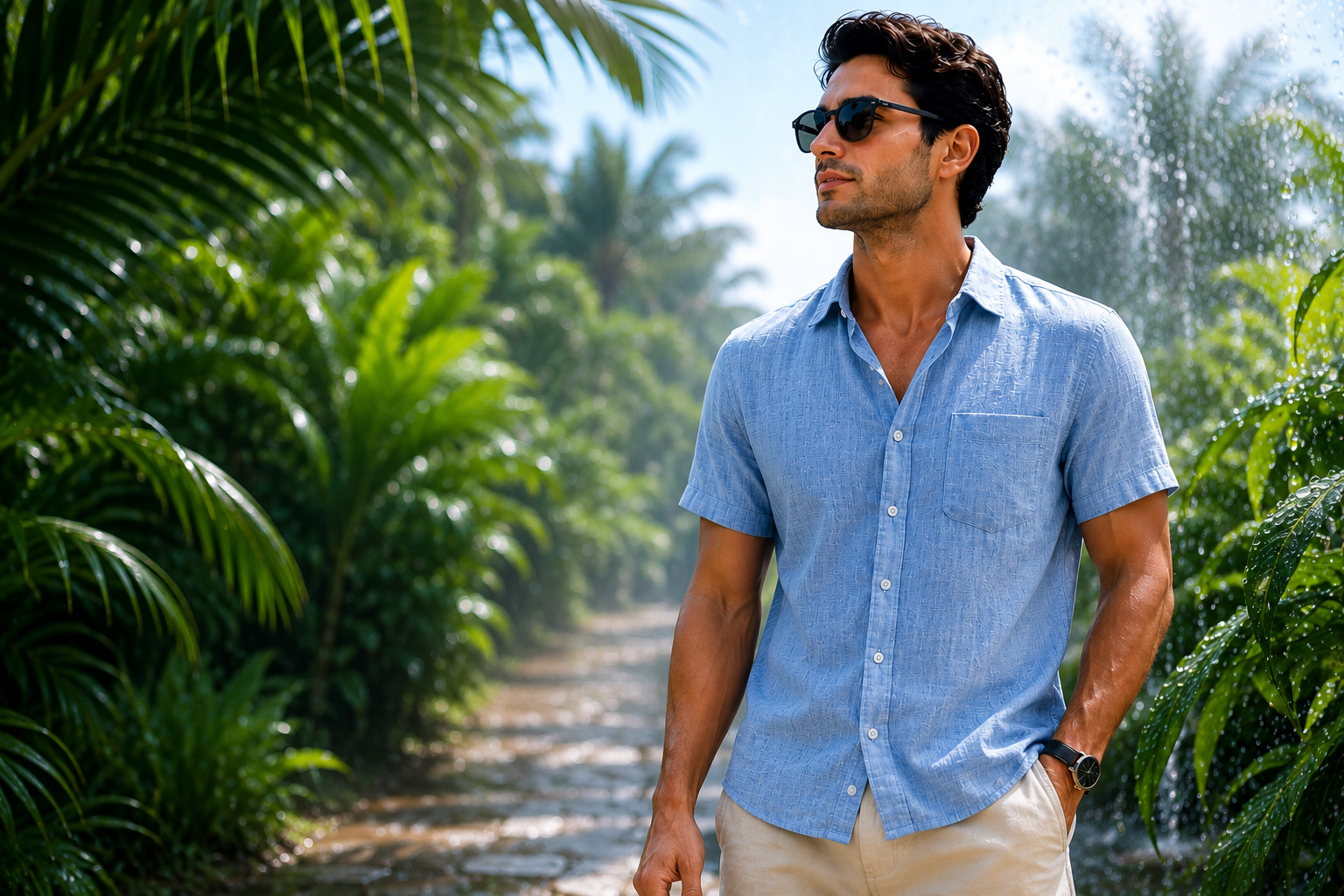
If your ultimate goal is to beat sticky, humid weather, linen is the best choice available. Made from the fibers of the flax plant, linen has been the go-to hot-weather fabric for centuries.
- Unmatched Breathability: Linen has a loose, open weave. This acts like a natural air conditioning system, allowing air to flow freely through the garment and pull heat away from your skin.
- Rapid Moisture Evaporation: Linen can absorb up to 20% of its weight in moisture before it even begins to feel damp. More importantly, it dries incredibly fast, meaning sweat doesn’t cling to you.
- It Structurally Stands Away From the Skin: Linen fibers are naturally stiff. Instead of clinging to your body when you sweat, linen garments drape loosely and stay lifted off your skin, maximizing airflow.
Style Tip: Yes, linen wrinkles easily—but that is part of its casual, effortless charm. Embrace the texture!
The Best Alternatives for Humid Weather
If you don’t want to wear linen every day, these three fabrics also offer excellent relief from extreme humidity:
1. Lightweight Cotton (Specifically Seersucker or Voile)
While regular heavy cotton can trap moisture and get weighed down by sweat, lightweight varieties are excellent for hot weather:
- Seersucker: This fabric features a signature crinkled, puckered texture. The weave is designed to naturally sit slightly off your skin, creating tiny air pockets that keep you cool.
- Voile or Cambric: These are semi-sheer, ultra-lightweight cotton weaves that feel almost weightless on a humid day.
2. Rayon and Viscose
Rayon is a man-made fabric created from natural wood pulp. Because its fibers are extremely thin, it doesn’t trap heat. It has a silky, cool-to-the-touch feel and drapes loosely over the body, preventing that sticky, clingy feeling.
3. Tencel (Lyocell)
Tencel is a modern, eco-friendly fabric made from eucalyptus trees. It is celebrated for its incredible moisture-wicking properties—it absorbs sweat much more efficiently than cotton and releases it quickly into the air, keeping you dry even in high humidity.
Fabrics to Avoid in High Humidity
To stay comfortable, check your tags and completely avoid synthetics like polyester, nylon, and acrylic.
These fabrics are essentially made from plastic. They do not breathe, they do not absorb water, and they trap body heat and sweat directly against your skin. Wearing polyester in extreme humidity is a fast track to overheating and discomfort.
Quick Checklist for Humid Day Dressing:
- Check the Tag: Look for 100% Linen, Cotton, or Tencel.
- Check the Fit: Choose loose, relaxed cuts over tight, form-fitting clothes to let air circulate.
- Check the Knit: Hold the fabric up to the light. If you can see through the weave slightly, air can pass through it easily.
Frequently Asked Questions (FAQs)
1. Is 100% cotton good for high humidity?
Only if it is a lightweight weave like seersucker, voile, or poplin. Regular or heavy cotton blends tend to absorb sweat and hold onto it, making the garment heavy, damp, and slow to dry in extreme humidity.
2. Why does polyester make you sweat so much?
Polyester is made from synthetic polymer fibers (essentially plastic), which means it lacks natural breathability. It traps your body heat and locks moisture against your skin instead of letting it evaporate, accelerating sweating.
3. Does linen wrinkle less if it’s a blend?
Yes. If you want the cooling benefits of linen with fewer wrinkles, look for a linen-cotton blend or a linen-viscose blend. These mixtures offer excellent airflow while maintaining a smoother appearance throughout the day.
4. What color clothes keep you coolest in the sun and humidity?
Light colors like white, cream, beige, and light pastels are best because they reflect solar radiation away from your body. Dark colors like black and navy absorb the sun’s heat, making you feel much hotter.
5. Is rayon better than cotton for hot weather?
Rayon is thinner and drapes more loosely than standard cotton, which gives it a cooler, silkier feel against the skin. However, cotton is more durable over time. For maximum comfort in extreme humidity, rayon or Tencel usually edges out basic cotton.