
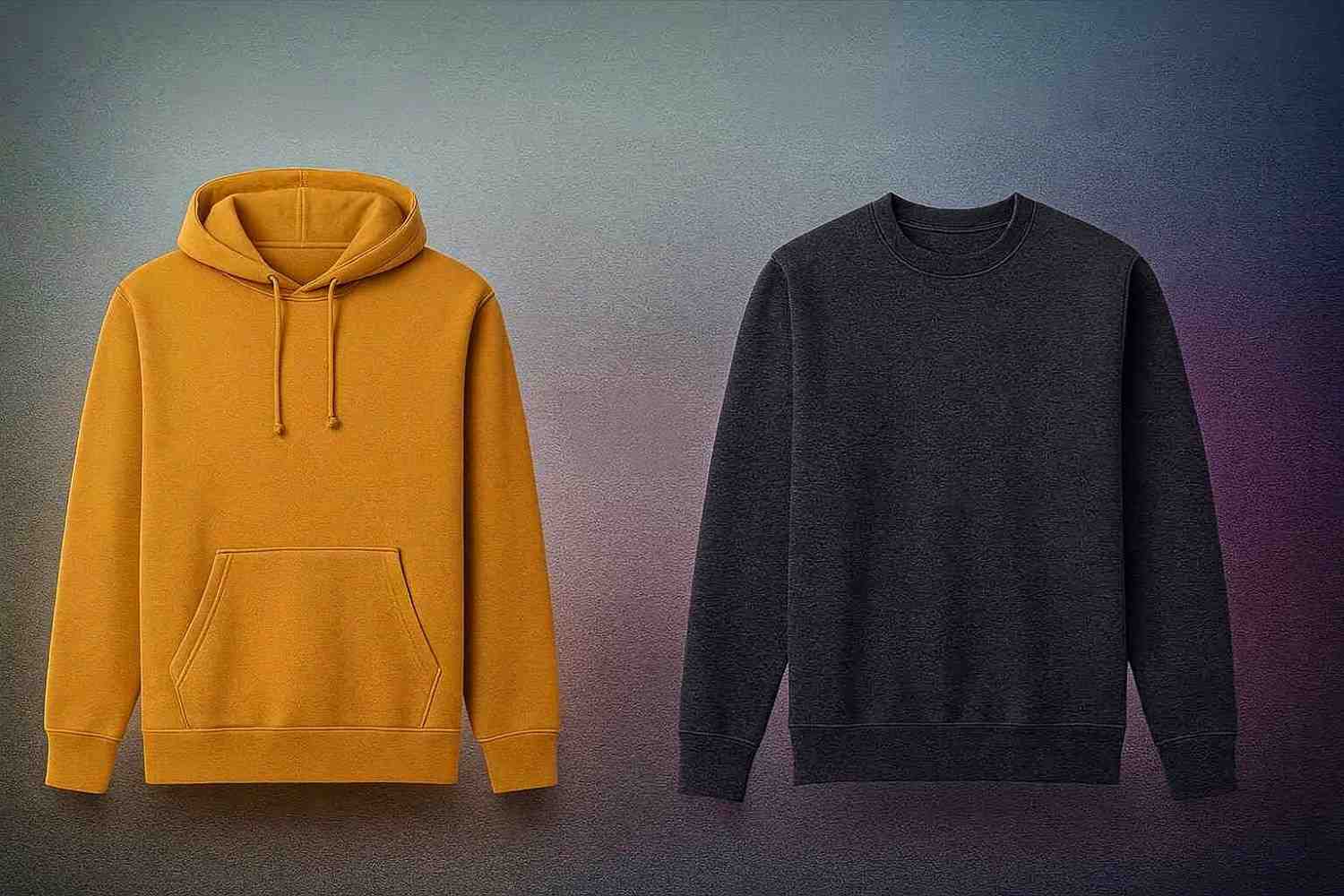
Hoodies and sweatshirts are two of the most popular casual wear staples in modern fashion. While they may look similar at first glance, their design, functionality, cultural impact, and practical use cases differ significantly.
Choosing between a hoodie and a sweatshirt depends on lifestyle, climate, professional environment, and personal style preferences.
This guide provides a comprehensive comparison of hoodies and sweatshirts, including benefits, risks, data-driven insights, practical applications, and future predictions in fashion and retail trends.
Understanding the Core Difference
The primary difference between hoodies and sweatshirts is structural design.
- A hoodie includes a hood attached to the neckline and often features drawstrings and a kangaroo pocket. It may come as a pullover or a zip-up style.
- A sweatshirt does not include a hood and usually has a simpler, crewneck or occasionally V-neck design.
Both are typically made from cotton, fleece, polyester blends, or performance fabrics designed for warmth and comfort.
Fabric and Construction Analysis
Both garments are often constructed from similar materials, yet their functionality changes due to design.
Common fabrics include:
- Cotton fleece for softness and insulation
- Cotton polyester blends for durability
- French terry for lightweight breathability
- Technical fabrics for athletic performance
From a structural perspective, hoodies require additional stitching and fabric to support the hood. This slightly increases production cost and weight. Sweatshirts have a cleaner neckline construction, making them lighter and easier to layer.
Data Insight
According to global apparel industry reports, fleece-based tops consistently rank among the top five casual clothing categories worldwide. Hoodies account for a slightly higher retail value per unit due to additional material and design complexity.
Benefits of Hoodies
Added Weather Protection
The hood provides functional coverage against wind, light rain, and cold temperatures. This makes hoodies ideal for outdoor environments.
Streetwear Appeal
Hoodies are deeply embedded in street culture, sportswear, and youth fashion. Major fashion houses and athletic brands regularly release premium hoodie collections.
Versatile Styling
Hoodies can be worn:
- Over gym wear
- Under jackets
- As standalone outerwear in mild climates
- With joggers or jeans for casual styling
Practical Features
Kangaroo pockets offer convenience for carrying small essentials. Zip-up hoodies allow easy temperature adjustment.
Benefits of Sweatshirts
Minimalist Design
Sweatshirts offer a clean silhouette. Without a hood, they pair more easily with formal or semi-formal outfits.
Easier Layering
Sweatshirts fit comfortably under blazers, coats, and structured jackets without bulk at the neckline.
Workplace Compatibility
In smart-casual workplaces, sweatshirts are generally perceived as more professional than hoodies.
Lightweight Comfort
Without the hood, sweatshirts are often lighter and less restrictive.
Risks and Limitations
While both garments offer advantages, they also have limitations depending on context.
Hoodie Risks
- Bulkiness when layered under fitted jackets
- May appear too casual in corporate settings
- Hood can cause discomfort when sitting against a chair or car seat
- Drawstrings may present minor safety concerns in industrial environments
Sweatshirt Risks
- No head protection in cold or windy weather
- Fewer storage options without pockets
- Less adaptability in sudden weather changes
From a safety standpoint, industries that require strict uniform codes may restrict hooded garments due to machinery entanglement risks.
Practical Use Cases
Understanding where and when each garment performs best helps determine which is better for specific needs.
Athletic and Gym Environments
Hoodies are preferred during warm-ups because the hood retains body heat. Athletes often remove them after reaching optimal body temperature.
Sweatshirts are more suitable for low-intensity activities or indoor workouts.
Travel and Commuting
Hoodies offer better protection against unpredictable weather, especially during air travel or long commutes.
Sweatshirts are easier to pack and take up less space in luggage.
Office and Business Casual Settings
Sweatshirts work better in business casual environments. They can be paired with chinos and clean sneakers for a polished appearance.
Hoodies are more suitable for creative industries such as media, tech startups, and design agencies.
Outdoor Activities
Hoodies provide extra insulation and adaptability in outdoor settings such as hiking or evening walks.
Sweatshirts perform well in mild climates without strong wind exposure.
Seasonal Breakdown
- Winter: Hoodies offer additional warmth
- Fall: Both garments perform well
- Spring: Sweatshirts are typically more comfortable
- Summer evenings: Lightweight sweatshirts are preferred
Case Breakdown Analysis
Case 1: College Student
A college student attending lectures, studying in libraries, and socializing may prefer hoodies for comfort and casual style. The hood offers privacy and warmth during late-night study sessions.
Case 2: Corporate Professional
A corporate employee in a hybrid office setting may choose sweatshirts for a clean and structured look. Layering under a blazer creates a modern smart-casual aesthetic.
Case 3: Athlete
An athlete training outdoors benefits from hoodies during warm-up and recovery periods due to heat retention.
Case 4: Minimalist Wardrobe Owner
Someone building a capsule wardrobe may prefer sweatshirts because they integrate more seamlessly with structured pieces.
Expert Angle and Market Trends
Fashion analysts observe that hoodies dominate youth-driven fashion markets. High-end luxury brands have elevated hoodies into premium categories with prices exceeding traditional knitwear.
Meanwhile, sweatshirts are gaining traction in minimalist and contemporary fashion movements due to their streamlined design.
Retail Data Observation
E-commerce platforms show that hoodies typically generate higher average order values. However, sweatshirts demonstrate higher repeat purchase rates due to versatility and workplace suitability.
Psychological and Cultural Perspective
Hoodies are often associated with comfort, privacy, and urban identity. They have strong connections to sports culture and music movements.
Sweatshirts convey simplicity, maturity, and understated style. Their clean lines make them adaptable across age groups.
Cultural perception also influences purchasing behavior. In some regions, hoodies are linked to youth culture, while sweatshirts are seen as timeless basics.
Sustainability Considerations
From a production standpoint, hoodies require more material. This may result in slightly higher environmental impact if produced at scale.
However, durability and usage frequency often determine sustainability. If a hoodie replaces multiple outer layers, it may justify its footprint.
Brands increasingly use organic cotton, recycled polyester, and low-impact dyes for both categories.
Predictions for the Future
The global casual wear market continues to expand. Industry forecasts suggest steady growth driven by remote work culture and comfort-focused fashion.
Key predictions include:
- Increased demand for performance-based fabrics
- Growth in sustainable production methods
- Blended designs that combine hoodie and sweatshirt features
- Smart textiles with temperature-regulating capabilities
Hybrid models such as hoodless hoodies or structured sweatshirts with technical insulation are expected to gain popularity.
FAQs
What is the main difference between hoodies and sweatshirts?
The main difference is design. Hoodies include a hood and often a kangaroo pocket or zipper, while sweatshirts have a simple crewneck or V-neck without a hood, making them lighter and easier to layer.
Which is better for cold weather, hoodies or sweatshirts?
Hoodies are better for cold weather because the hood provides additional warmth and protection against wind. Sweatshirts offer warmth but do not provide head coverage.
Are sweatshirts more professional than hoodies?
Yes, sweatshirts are generally more suitable for business casual environments because their clean neckline design allows them to be layered easily with blazers, coats, or structured outfits.
Which is better for layering, hoodies or sweatshirts?
Sweatshirts are better for layering because they do not have a hood that creates bulk around the neck, making them easier to wear under jackets, coats, or blazers.
Final Insights
Hoodies and sweatshirts serve overlapping but distinct roles in modern wardrobes. Data suggests hoodies generate stronger cultural impact and higher per-unit value, while sweatshirts maintain broader cross-environment adaptability.
Rather than asking which is universally better, the smarter question is which is better for your specific lifestyle, climate, and professional setting.
In a balanced wardrobe, owning both provides maximum flexibility. Hoodies excel in casual, outdoor, and athletic environments. Sweatshirts dominate in minimalist styling, smart-casual workplaces, and structured layering.
Explore More Expert Insights
Discover expert guides on fashion trends, style tips, and accessory must-haves to help you elevate your wardrobe effortlessly.
- Where to Buy Earrings Online in Medford, NY – Shop beautiful earrings online from Medford, NY today.
- How to Clean Stainless Steel Jewelry – Keep stainless steel jewelry shiny with simple cleaning tips.
- How to Choose Perfume for Sensitive Skin – Select the perfect perfume safe for sensitive skin.
- Explore Popular Types of Caps for Men – Discover popular cap styles every man should own today.
- Different Types of Necklace Chains – Explore different types of necklace chains, styles, and designs.